
Concrete Cost Salt Lake City: Complete 2026 Price Guide & Calculator
Installing concrete in Salt Lake City creates durable driveways, patios, and foundations that increase property value by 8–15% while handling Utah's expansive clay soil, freeze-thaw cycles, and temperature extremes from 10°F to 95°F.
Calculate Your Concrete Cost
What This Concrete Cost Estimate Includes
Site Excavation: Removing existing grass, soil, or old concrete to proper depth (typically 8–12 inches total), grading for drainage slope, and hauling away excavated clay soil. Clay removal is critical in Salt Lake Valley.
Compacted Gravel Base: 4–6 inches of crushed rock compacted in layers using mechanical compactor. This provides stable foundation preventing settling in expansive clay soil conditions. Proper base preparation is non-negotiable.
Vapor Barrier (interior slabs): Plastic sheeting beneath concrete preventing moisture migration from soil into slab. Required for basement floors, garage floors, and interior applications.
Reinforcement: Wire mesh or rebar grid providing tensile strength to concrete, preventing wide cracks from forming during freeze-thaw cycles and soil movement.
Concrete Mix: Ready-mix concrete delivered by truck, formulated for Salt Lake City’s climate with air entrainment (4–6% air bubbles) helping concrete resist freeze-thaw damage. PSI strength selected for application.
Professional Installation: Skilled concrete crew, equipment rental (mixer truck, screeds, floats, trowels), proper pouring and finishing techniques, quality control verification.
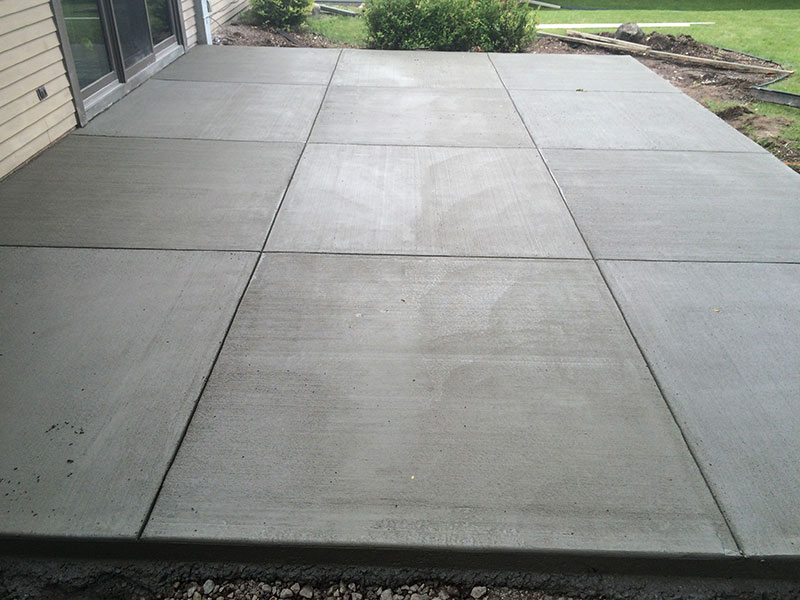
Finishing: Float finishing for driveways and patios, broom finish for walkways providing slip resistance, edging and jointing creating clean lines and controlling crack locations.
Curing: Application of curing compound sealing moisture in concrete for proper strength development over 28-day cure period.
Control Joints: Strategic cuts or grooves spacing concrete into sections, directing cracks to form along joints rather than randomly across surface.
Not included: major site grading beyond project footprint, retaining walls (unless specified), decorative elements beyond standard finishing, sealing (additional cost), landscape restoration, long-term maintenance.
Why Costs Vary in Salt Lake City
Expansive Clay Soil Challenges
Salt Lake Valley clay soil absorbs water and swells significantly, creating pressure that cracks concrete. Clay also shrinks when dry, causing settling and voids beneath slabs. Professional installations require removing clay, installing 4–6 inches of compacted gravel base, and proper drainage slope. Skipping adequate base preparation saves $600–$1,200 upfront but results in cracked, settled concrete within 3–5 years requiring $2,500–$6,000 replacement. Areas like West Valley City, Magna, and West Jordan have particularly heavy clay demanding extra base depth and compaction.
Freeze-Thaw Cycle Requirements
Winter temperatures dropping to 10–20°F followed by spring thaws create expansion and contraction cycles. Water trapped in concrete pores freezes, expanding and creating internal pressure that spalls and cracks inadequate mixes. Professional concrete includes air entrainment (4–6% microscopic air bubbles) providing space for ice expansion without damaging concrete structure. Concrete without proper air entrainment fails within 5–10 years from freeze damage. Properly specified mixes cost $5–$15 more per cubic yard but last 30–50 years versus 7–12 years for inadequate concrete.
Concrete Strength and Application
Basic 3,000 PSI concrete works for walkways and residential patios at $131–$137 per cubic yard. Driveways need 4,000 PSI at $140–$147 per yard to handle vehicle weight. Foundations and commercial applications require 5,000 PSI at $149–$157 per yard. Higher PSI concrete contains more cement, providing greater strength and durability. Using inadequate strength saves $8–$20 per yard upfront but results in premature cracking and shorter lifespan.
Reinforcement Requirements
Unreinforced concrete cracks easily from soil movement and temperature stress. Wire mesh costs $0.75–$1.50 per square foot and provides basic crack control. Rebar grid at $1.50–$3 per square foot offers superior strength for driveways and foundations. Fiber reinforcement at $0.50–$1 per square foot adds small plastic or steel fibers throughout mix preventing hairline cracks. Most residential projects use wire mesh as minimum reinforcement with rebar for structural applications.
Project Size and Complexity
Small projects under 200 square feet pay premium per-square-foot rates due to minimum charges and truck delivery fees. Standard residential driveways of 400–600 square feet achieve best pricing. Large projects over 1,000 square feet benefit from volume discounts of 10–15%. Complex shapes with curves, multiple elevations, or integrated features increase forming labor by 20–30%. Simple rectangular pours minimize waste and labor costs.
Site Access and Preparation
Backyards with good access allow concrete trucks direct pour. Restricted access requires pump trucks adding $600–$1,200 to costs. Properties needing extensive excavation, rock removal, or grading face additional prep costs of $400–$1,500. Foothills properties in Sandy, Draper, and Cottonwood Heights encounter rocky soil or steep terrain complicating access and excavation. Downtown Salt Lake City properties face parking restrictions and limited staging areas.
Decorative Finishes and Upgrades
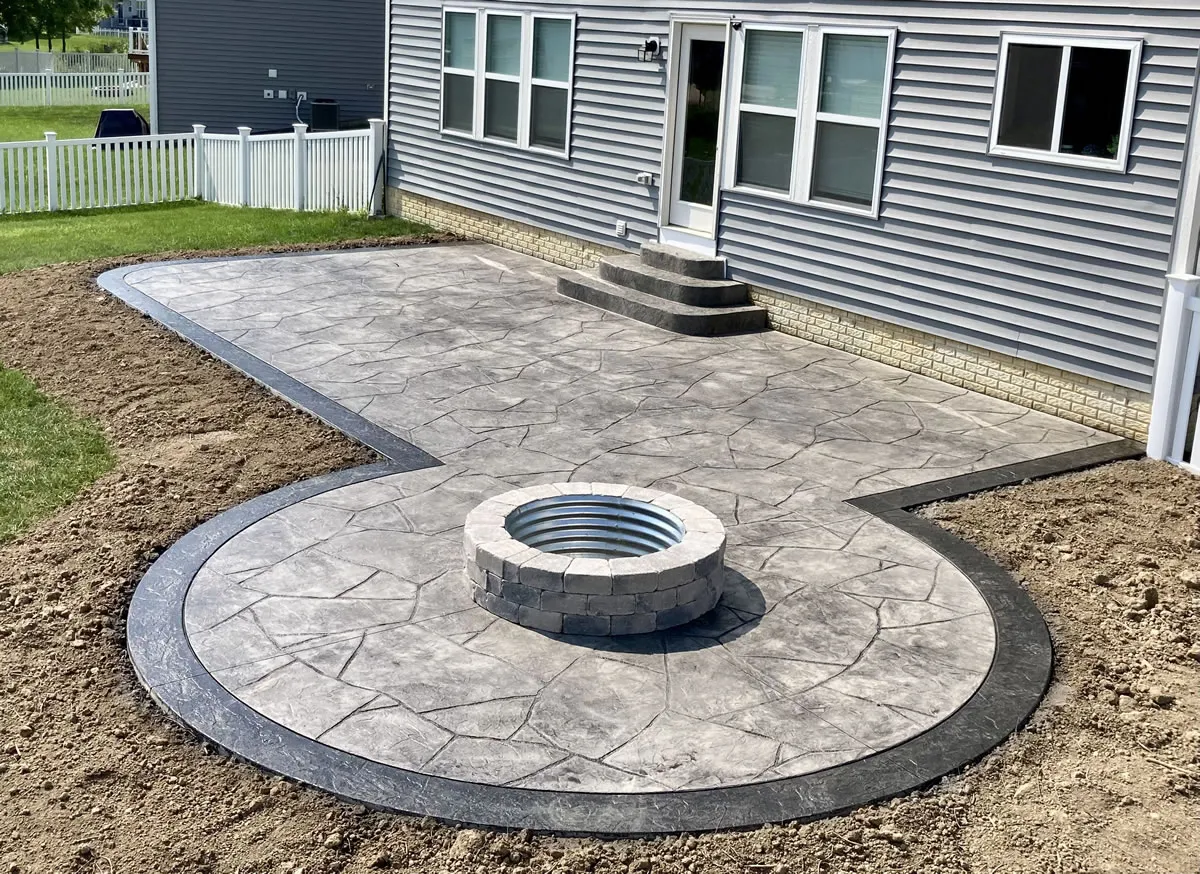
Basic gray concrete costs $7–$9 per square foot. Colored concrete using integral pigments runs $8–$12 per square foot. Stamped concrete replicating stone, brick, or tile patterns costs $12–$22 per square foot with professional installation. Acid staining creating variegated color effects reaches $10–$18 per square foot. Exposed aggregate finishes showing decorative stone cost $9–$15 per square foot. These upgrades enhance appearance but require skilled finishers and additional labor.
Average Concrete Cost in Salt Lake City
Concrete Driveway (400 sq ft, 4 inches thick): $2,800–$3,600
Concrete Driveway (600 sq ft, 4 inches thick): $4,200–$5,400
Concrete Patio (200 sq ft, 4 inches thick): $1,400–$2,200
Concrete Patio (300 sq ft, 4 inches thick): $2,100–$3,300
Concrete Walkway (100 sq ft, 4 inches thick): $700–$1,100
Concrete Slab/Foundation (500 sq ft, 6 inches thick): $4,200–$6,600
Price Per Square Foot:
Basic Concrete (3,000 PSI): $7–$9
Standard Concrete (4,000 PSI): $7.50–$10
High-Strength (5,000 PSI): $8.50–$11
Reinforced with Rebar/Mesh: $9–$13
Stamped/Decorative: $12–$22
Stained Concrete: $10–$18
Concrete Price Per Cubic Yard (Salt Lake City delivery):
3,000 PSI: $131–$137
4,000 PSI: $140–$147
5,000 PSI: $149–$157
Additional Costs:
Excavation and Site Prep: $400–$1,200
Gravel Base (4–6 inches): $1.50–$3 per square foot
Old Concrete Removal: $2–$6 per square foot
Permits (if required): $50–$300
Most Salt Lake City homeowners spend $3,500–$6,000 for complete concrete installations including proper base preparation, quality concrete mix, and professional finishing.
How to Save on Concrete Costs in Salt Lake City
Schedule work in spring or fall when contractors have better availability and competitive pricing. Summer peak season commands premium rates and 6–8 week lead times. May and September–October offer ideal weather for curing and better contractor availability.
Invest in proper base preparation rather than cutting corners. Spending $600–$1,200 on adequate gravel base and compaction prevents $3,000–$8,000 replacement costs within 5–10 years from settling and cracking. Design it right initially rather than fixing failures.
Choose standard gray concrete over decorative finishes initially. Basic concrete costs $7–$9 per square foot versus $12–$22 for stamped finishes. Concrete can be stained, overlayed, or decorated later as budget allows. Focus investment on proper base and quality concrete mix.
Keep shapes simple with straight edges and right angles. Curves, circles, and complex shapes increase forming labor by 20–30%. Rectangular driveways and patios maximize usable space while minimizing cutting and fitting time.
Provide excellent site access by removing obstacles, clearing pathways, and ensuring concrete trucks can reach pour location. Difficult access requiring pump trucks adds $600–$1,200. Simple rear yard access saves significant costs.
Order adequate concrete the first time. Short loads under 10 cubic yards incur $43–$65 per yard penalties. Calculate needs accurately and order 5–10% extra to accommodate variances. Ordering additional trucks for shortages costs more than slight overage.
Get 3–4 detailed estimates that specify concrete PSI strength, air entrainment, base depth, reinforcement type, and finishing methods. Compare contractor experience with clay soil conditions. The lowest bid typically skips critical base work or uses inadequate concrete specifications.
Frequently Asked Questions – Concrete Costs in Salt Lake City
Get answers to the most common questions about construction costs, regulations, and feasibility in Salt Lake City.
Do I need a permit for concrete work in Salt Lake City?
Most driveways, patios, and walkways don’t require building permits unless they’re part of larger structural work. Concrete slabs for sheds or structures may need permits depending on size and use. Major foundation work always requires permits with plan review and inspections. Verify requirements with Salt Lake City Building Services at 801-535-6000 before starting. Some municipalities within Salt Lake County have different requirements. Permit fees typically run $50–$300 when required.
How thick should concrete be in Salt Lake City?
Residential driveways need minimum 4-inch thickness, preferably 5–6 inches for heavy vehicles. Patios and walkways require 4 inches. Garage floors need 4–6 inches depending on expected loads. Foundation slabs typically require 6 inches or more with engineering specifications. All concrete should rest on minimum 4 inches of compacted gravel base in clay soil areas. Thicker concrete provides better durability and longer lifespan in freeze-thaw conditions.
How long does concrete take to cure in Salt Lake City?
Concrete reaches sufficient strength for foot traffic in 24–48 hours. Wait minimum 7 days before driving on new driveways. Full strength develops over 28–30 days. Moisture content, temperature, and humidity affect cure times. Cold weather slows curing while hot weather accelerates it. Proper curing with sealing compounds maintains moisture for optimal strength development. Rushing cure times by early loading risks permanent damage and cracking.
What's the best concrete mix for Salt Lake City's climate?
Use minimum 4,000 PSI concrete with 4–6% air entrainment for freeze-thaw resistance. Air-entrained concrete contains microscopic air bubbles providing space for ice expansion without damaging concrete structure. This specification is critical for Salt Lake City’s winter conditions. Confirm your contractor orders air-entrained mix from ready-mix supplier. Without air entrainment, concrete spalls and deteriorates within 5–10 years from freeze damage.
How much does it cost to remove old concrete?
Removing old concrete costs $2–$6 per square foot including demolition, breaking concrete into pieces, loading, and disposal fees. A 400 square foot driveway costs $800–$2,400 to remove. Thicker concrete or reinforced slabs cost more. Many contractors bundle removal into new concrete pricing at reduced rates. Proper disposal follows environmental regulations for concrete recycling. Attempting DIY removal requires equipment rental approaching professional costs.
Talk to a Salt Lake City Concrete Contractor Today
Your concrete investment creates durable surfaces, increases property value, and handles Utah’s demanding climate. Proper installation with adequate base preparation, air-entrained concrete, and correct reinforcement ensures your concrete performs for decades without cracking, settling, or freeze damage.
Professional Salt Lake City contractors understand clay soil challenges, freeze-thaw requirements, and proper concrete specifications. They excavate to adequate depth, install compacted gravel base, and order concrete mixes designed specifically for Utah’s temperature extremes.