
Deck Cost Salt Lake City: Complete 2026 Price Guide & Calculator
Building a deck in Salt Lake City creates outdoor living space, increases property value by 10–18%, and provides entertainment areas that handle Utah's clay soil conditions, freeze-thaw cycles, and temperature extremes from 10°F to 95°F.
Calculate Your Deck Cost
What This Deck Cost Estimate Includes
Footing Excavation: Digging holes 30–36 inches deep (below frost line) for deck posts, spaced according to structural requirements. Clay soil excavation requires power augers due to dense, moisture-retaining conditions.
Concrete Footings: Pouring concrete piers below frost line to prevent heaving during freeze-thaw cycles. Clay soil demands concrete anchoring to prevent post movement from soil expansion and contraction.
Pressure-Treated Posts and Framing: Ground-contact rated posts (4×4 or 6×6), beams (typically 2×8 or 2×10), joists (2×6 or 2×8 spaced 16 inches on center), and proper hardware connections meeting structural load requirements.
Decking Boards: Pressure-treated pine, cedar, composite, or exotic hardwood boards installed with proper spacing for drainage and expansion. Materials must withstand temperature swings and intense UV exposure at 4,200 feet elevation.
Railings (decks over 30 inches): Code-required railings with balusters spaced no more than 4 inches apart, top rail at 36–42 inches height, meeting Salt Lake City safety requirements.
Stairs: Stringers, treads, risers meeting 7.75-inch maximum rise requirements, and handrails for stairs with more than three risers. Proper stair construction prevents tripping hazards.
Professional Installation: Skilled carpentry crew, equipment rental (auger, circular saw, drill), proper installation following building codes, inspection coordination.
Permits and Inspections: Building permit for decks over 30 inches high or attached to homes, footing inspection, final inspection, and approval documentation.
Fasteners and Hardware: Galvanized or stainless steel screws, joist hangers, post brackets, lag bolts resistant to rust in Utah’s climate conditions.
Not included: site grading beyond footing locations, retaining walls, patio underneath deck, landscape restoration, furniture, fire features, outdoor kitchens, decorative elements beyond standard construction.
Why Costs Vary in Salt Lake City
Expansive Clay Soil and Foundation Requirements
Salt Lake Valley clay soil absorbs water and swells significantly, creating pressure that shifts deck posts. Clay also contracts when dry, loosening footings. Professional installations require concrete footings 30–36 inches deep below frost line with 12-inch diameter piers. Skipping adequate depth or concrete saves $800–$1,500 upfront but results in unstable decks within 3–5 years. Clay soil digging costs $3–$6 more per footing than sandy soil due to labor intensity requiring power augers.
Permit Requirements and Height Regulations
Salt Lake City requires building permits for decks over 30 inches above grade or attached to dwellings. Permit fees run $150–$400. Decks over 30 inches need railings with balusters spaced no more than 4 inches apart and stairs meeting specific rise/run requirements. Working without permits creates liability issues, code violations during home sales, and potential removal orders. Freestanding decks under 30 inches typically don’t require permits but still must meet setback requirements.
Material Selection and Climate Durability
Pressure-treated pine at $17–$20 per square foot needs annual maintenance with water-repellent sealers to prevent cracking, warping, and splintering in Utah’s dry climate and intense UV. Cedar costs $28–$32 per square foot and naturally resists rot but still requires sealing every 2–3 years. Composite decking at $33–$35 per square foot never needs staining, resists temperature swings from 10°F to 95°F, and lasts 25–40 years with minimal maintenance. All materials need proper ventilation underneath to prevent moisture accumulation in clay soil areas.
Deck Size and Height Above Grade
Ground-level decks under 30 inches cost $17–$20 per square foot for pressure-treated pine. Elevated decks 3–6 feet high require taller posts, longer stairs, and mandatory railings, pushing costs to $22–$28 per square foot. Second-story decks 8–12 feet high need engineered beams, additional bracing, extensive stairs with landings, and professional structural design, reaching $30–$45 per square foot. Each foot of elevation adds complexity and material costs.
Stairs and Railing Complexity
Simple 3–4 step stairs cost $450–$900. Full stairways with 8–12 steps requiring landings and handrails reach $1,800–$3,600. Railing costs vary: pressure-treated wood railings run $35–$55 per linear foot, composite railings cost $55–$75 per linear foot, and cable or glass railings reach $90–$150 per linear foot. Most 200 square foot decks need 30–40 linear feet of railing.
Site Conditions and Access
Level yards with good access allow efficient installation. Properties with slopes requiring deck leveling or multiple elevation changes increase foundation costs by 25–40%. Foothills properties in Sandy, Draper, and Cottonwood Heights face rocky soil requiring special drilling equipment, adding $400–$1,200. Downtown Salt Lake City properties deal with limited access and parking restrictions complicating material delivery and equipment use.
Attached vs. Freestanding Decks
Attached decks connecting to homes require ledger boards properly flashed and bolted to house structure, coordination with existing siding and doors, and structural analysis ensuring house can support deck loads. These factors add 10–20% to costs but eliminate one beam line. Freestanding decks need posts and beams on all four sides but avoid house modifications and complex flashing details. Both require identical footing depth in clay soil.
Average Deck Cost in Salt Lake City
Small Wood Deck (10×12, 120 sq ft): $2,000–$2,400
Medium Wood Deck (12×16, 192 sq ft): $3,400–$4,000
Large Wood Deck (16×20, 320 sq ft): $6,800–$8,000
Small Composite Deck (10×12, 120 sq ft): $3,300–$3,500
Medium Composite Deck (12×16, 192 sq ft): $6,600–$7,000
Large Composite Deck (16×20, 320 sq ft): $13,300–$14,000
Price Per Square Foot by Material:
Pressure-Treated Pine: $17–$20
Cedar: $28–$32
Composite (Trex, TimberTech): $33–$35
PVC Decking: $36–$42
Redwood: $37–$40
Exotic Hardwoods (Ipe, Tigerwood): $44–$58
Additional Costs:
Stairs (per step): $150–$300
Railings: $35–$90 per linear foot
Built-In Seating: $1,200–$3,500
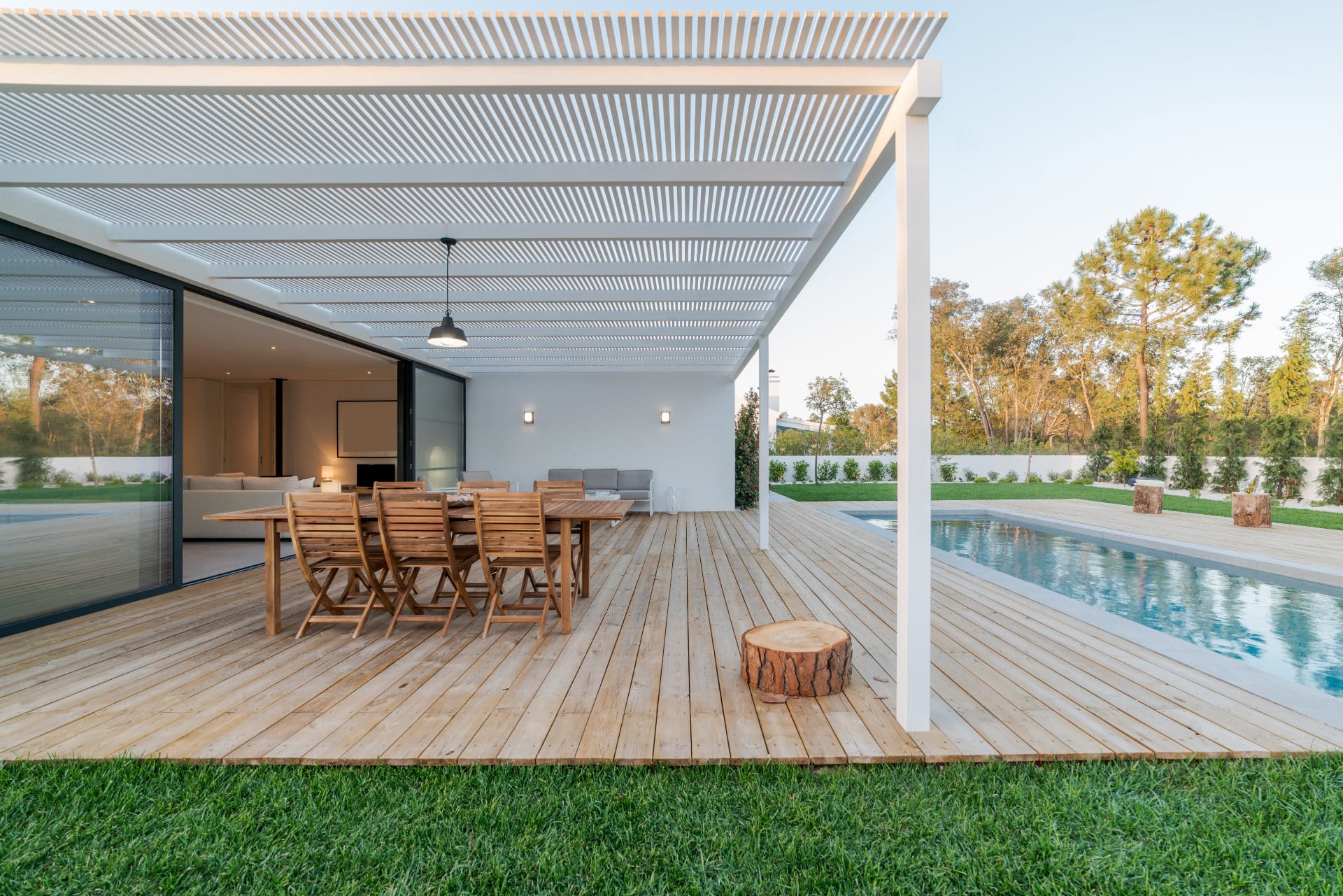
Pergola or Roof Cover: $4,800–$14,000
Deck Lighting: $600–$2,200
Old Deck Removal: $4–$8 per square foot
Most Salt Lake City homeowners spend $6,500–$10,000 for complete deck installations (200–300 square feet) including proper footings in clay soil, railings, stairs, and professional installation.
How to Save on Deck Costs in Salt Lake City
Choose composite over wood for long-term savings. Composite costs $33–$35 per square foot versus $17–$20 for pine, but eliminates $300–$600 annual maintenance. Over 20 years, composite saves $4,000–$8,000 in sealing costs while providing superior durability.
Keep deck height under 30 inches to avoid permit requirements and mandatory railings. Ground-level decks cost 25–35% less than elevated structures requiring extensive stairs and railing systems.
Schedule construction in spring or fall when contractors have better availability and competitive pricing. Summer peak season commands premium rates and 6–8 week lead times. May and September offer ideal weather and better value.
Build in stages by installing basic deck first, then adding railings, built-in seating, and pergolas in future years as budget allows. Core structure costs $5,000–$8,000 while amenities add $3,000–$8,000 more.
Provide excellent site access by clearing pathways, removing gates temporarily, and ensuring augers can reach footing locations easily. Difficult access adds $400–$900 in manual labor or equipment challenges.
Simplify design with rectangular shapes and straight runs. Complex layouts with angles, curves, or multiple levels increase material waste and labor by 20–30%. Rectangular decks maximize usable space at minimum cost.
Get 3–4 detailed estimates that specify materials by brand, footing depth, railing systems, and warranty terms. Compare contractor experience with clay soil conditions and permit handling. The lowest bid typically skips adequate footing depth or uses inferior materials.
Frequently Asked Questions – Deck Costs in Salt Lake City
Get answers to the most common questions about construction costs, regulations, and feasibility in Salt Lake City.
Do I need a permit to build a deck in Salt Lake City?
Decks over 30 inches above grade or attached to dwellings require building permits. Permit fees run $150–$400 depending on project size. Decks over 30 inches need railings and stairs meeting code requirements. Freestanding decks under 30 inches typically don’t need permits but must meet setback requirements (usually 3–10 feet from property lines). Contact Salt Lake City Building Services at 801-535-6000 before starting construction to verify requirements for your specific project.
How deep do deck footings need to be in Salt Lake City?
Footings must extend minimum 30 inches below grade to reach below frost line. Salt Lake Valley experiences frost penetration to 30–36 inches during winter. Footings above frost line heave and shift during freeze-thaw cycles, destabilizing decks within 3–5 years. Clay soil requires 12-inch diameter concrete piers to prevent post movement from soil expansion. Professional contractors excavate to 36 inches in clay soil areas for maximum stability.
What's the best deck material for Salt Lake City's climate?
Composite decking offers the best combination of durability and low maintenance. It handles temperature swings from 10°F to 95°F without warping, never needs staining, and lasts 25–40 years. Composite costs $33–$35 per square foot versus $17–$20 for pressure-treated pine. Cedar provides natural beauty at $28–$32 per square foot but requires sealing every 2–3 years to prevent UV damage. All materials perform well structurally with proper installation—material choice affects maintenance more than longevity.
How long does it take to build a deck?
Standard 12×16 decks take 5–7 days including footing installation, framing, decking, railings, and stairs. Larger 16×20 decks require 7–10 days. Permit approval adds 2–4 weeks before construction starts. Clay soil excavation takes longer than sandy soil. Complex designs with multiple levels, built-in seating, or extensive stairs extend timelines by 3–5 days. Most contractors prefer construction from May through September when weather is predictable.
How much does deck maintenance cost in Salt Lake City?
Composite decks need only twice-yearly washing with soap and water, costing $50–$150 annually for cleaning supplies or $200–$400 for professional cleaning. Pressure-treated pine decks require annual sealing at $300–$600 for materials and labor (150 square feet). Cedar decks need sealing every 2–3 years at similar costs. Over 20 years, composite saves $4,000–$8,000 in maintenance versus wood despite higher upfront cost.
Talk to a Salt Lake City Deck Contractor Today
Your deck investment creates outdoor living space, increases property value, and provides entertainment areas that handle Utah’s demanding climate. Proper installation with footings below frost line and concrete anchoring in clay soil ensures your deck remains stable for decades.
Professional Salt Lake City contractors understand clay soil challenges, frost line requirements, and building code compliance. They excavate to adequate depth, install proper concrete footings, and build railings meeting safety standards.